Lineages of Labor: Weaving Histories is a project that considers the history of industrialization and its continued repercussions, contextualizing the exploitation of workers by those in power as well as the missteps and systematic demonization of organized labor while celebrating our connection to textiles.
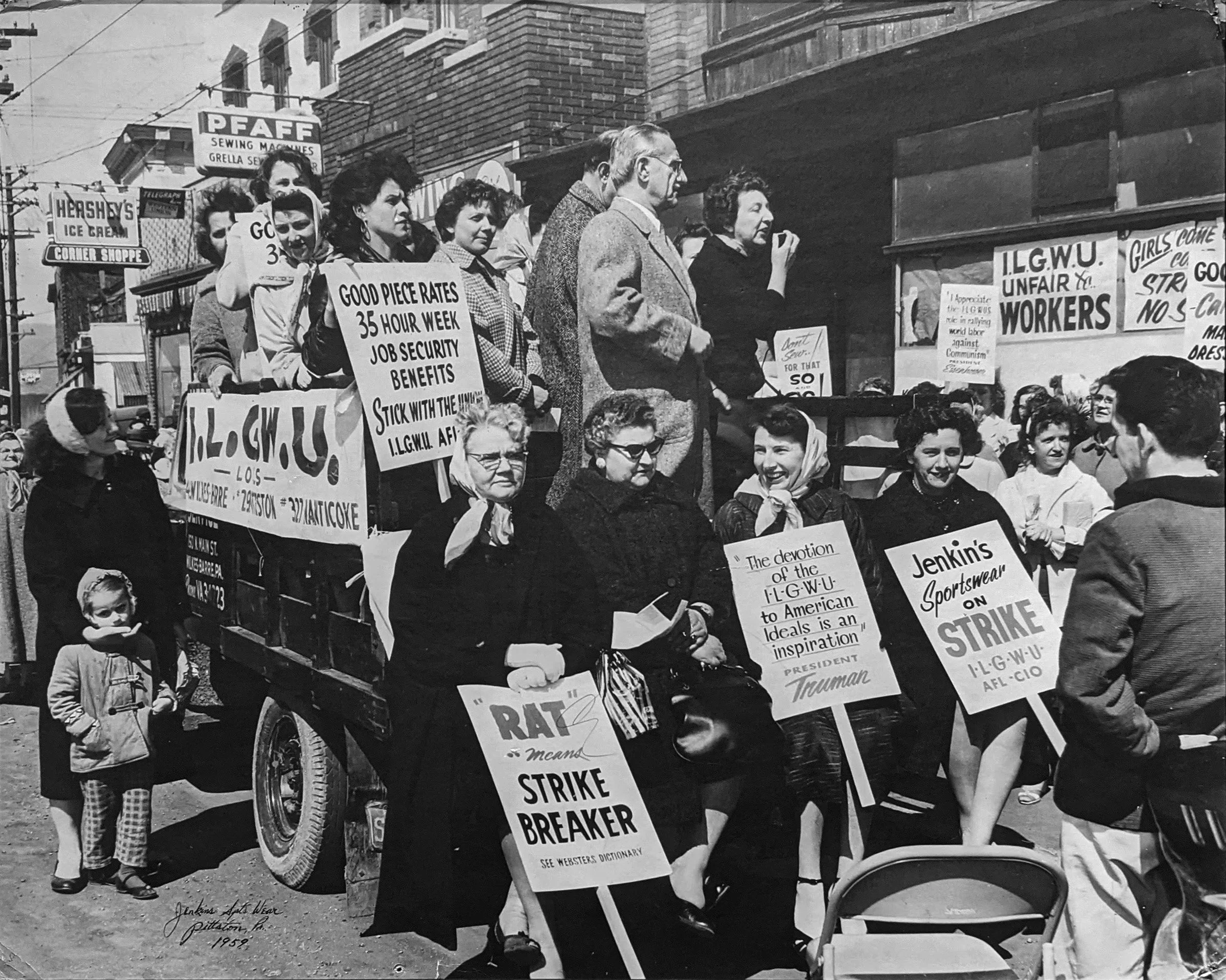
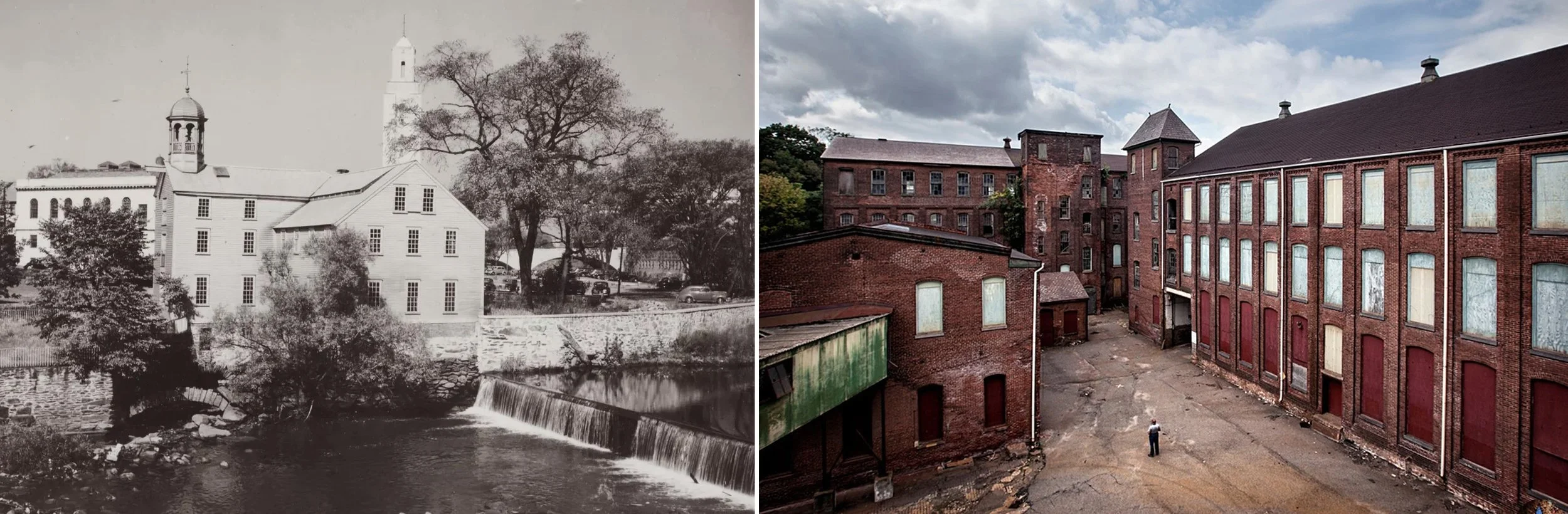
The first factory strike in the so-called United States was led by women workers, occurring at Slater Mill in Pawtucket, Rhode Island in 1824. After subsequent successful strikes and unionization efforts in New England led to increased wages and safety measures, textile producers intentionally built factories in Northeastern Pennsylvania to exploit the labor of women and children — many of whom were part of large families dependent on the uncertain and inadequate wages of men working in mines and quarries.
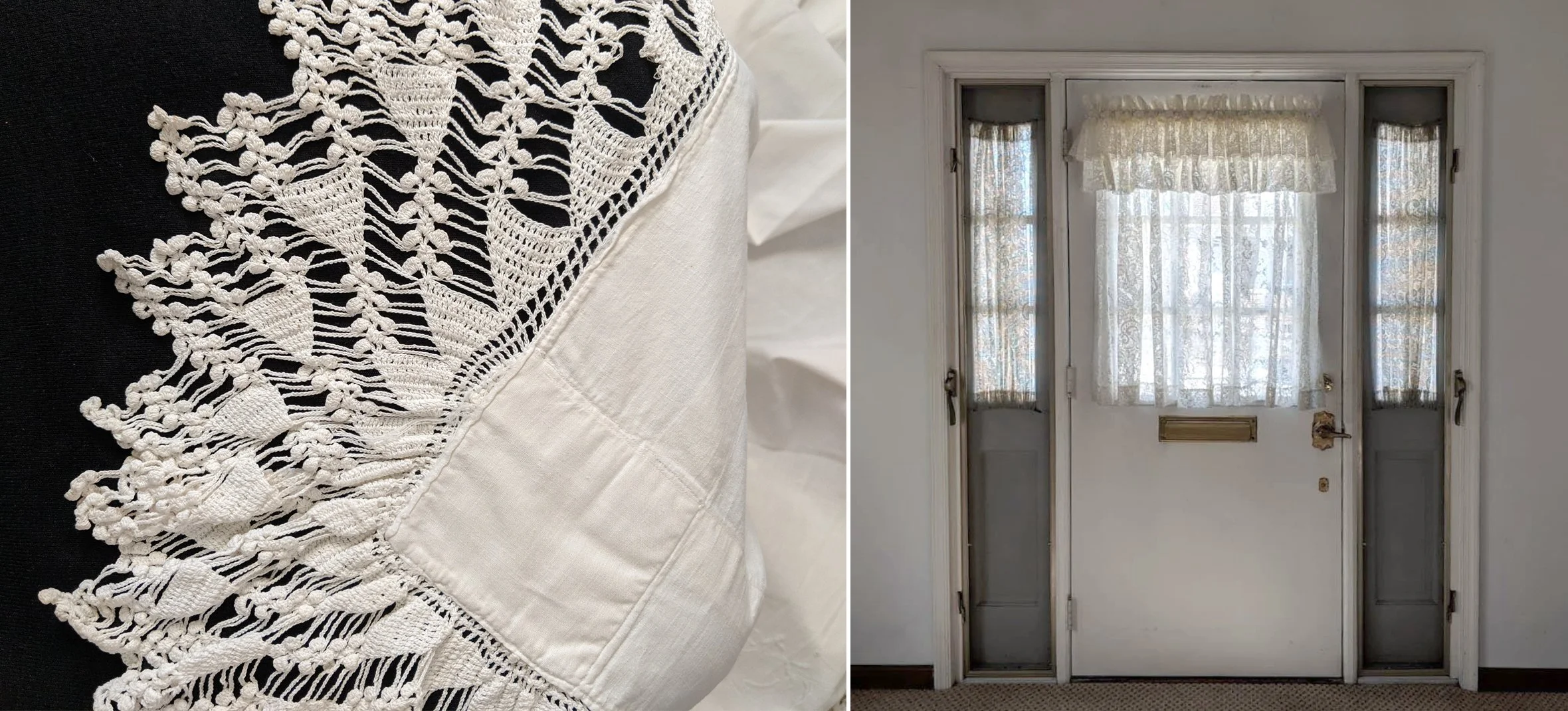
The silk mill where my bisnonna worked is now luxury condos, and the textile factory where my nonna and my great aunts worked was torn down and replaced by a strip mall with a CVS and Dunkin Donuts – a situation familiar to many folks in the north east.
IN PERSON EVENTS:
50 Agnes St #209 Providence RI 02908
The Snake Hair studio is located in the Harrison Steam building in the Olneyville neighborhood of Providence, Rhode Island. Then known as the Eagle Steam Mill No 1, the original stone structure was built in 1829, employing around 125 workers to produce cotton yarn and cloth. Throughout the years and multiple additions and partial demolitions, the building has also been known as the Providence Combing Mills, John Waterman Mills, Lawton Spinning Company, Pocassett Combing Company, and Victory Pearl Company. The studio is located on the second floor, and is accessible by stairs and elevator.
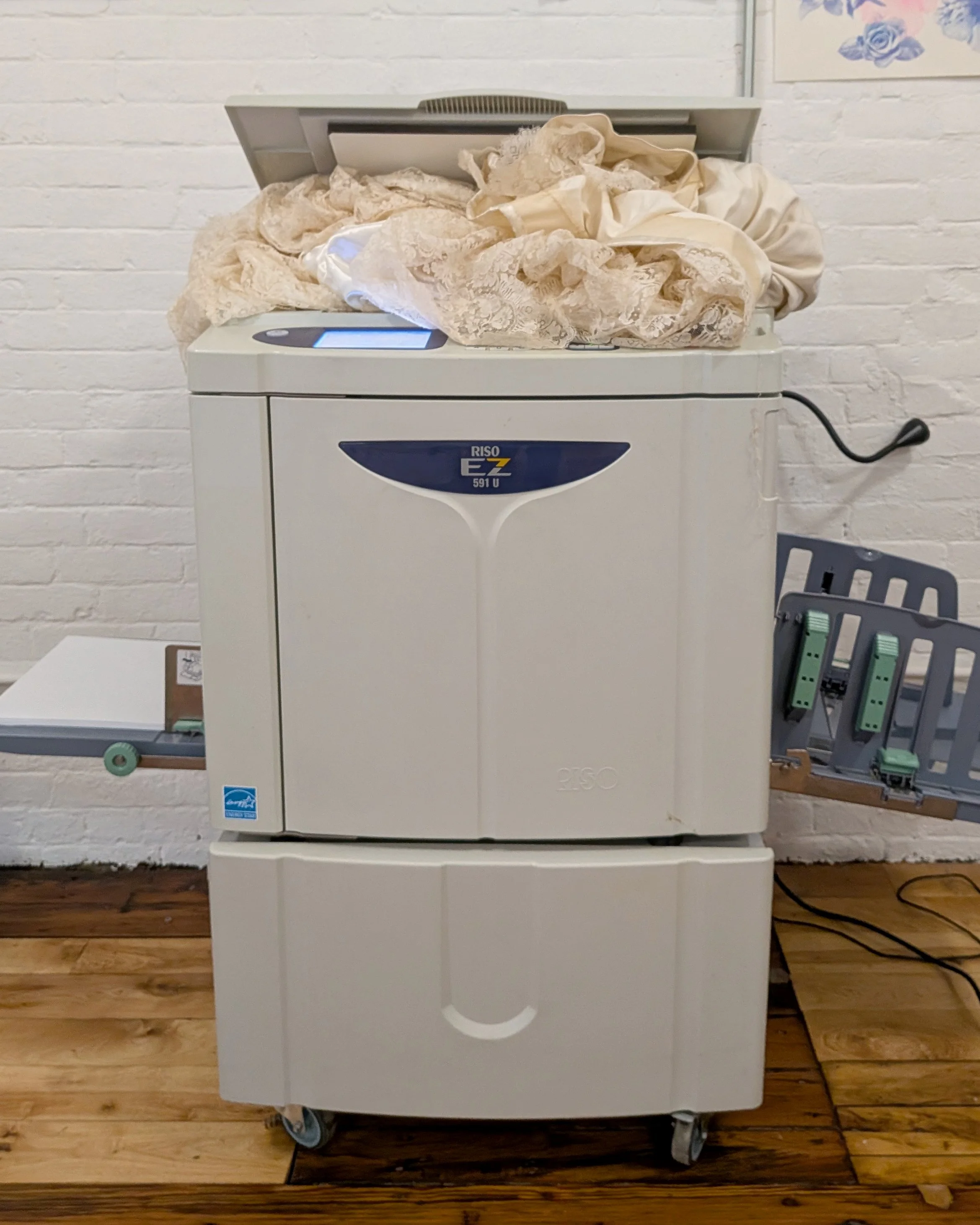
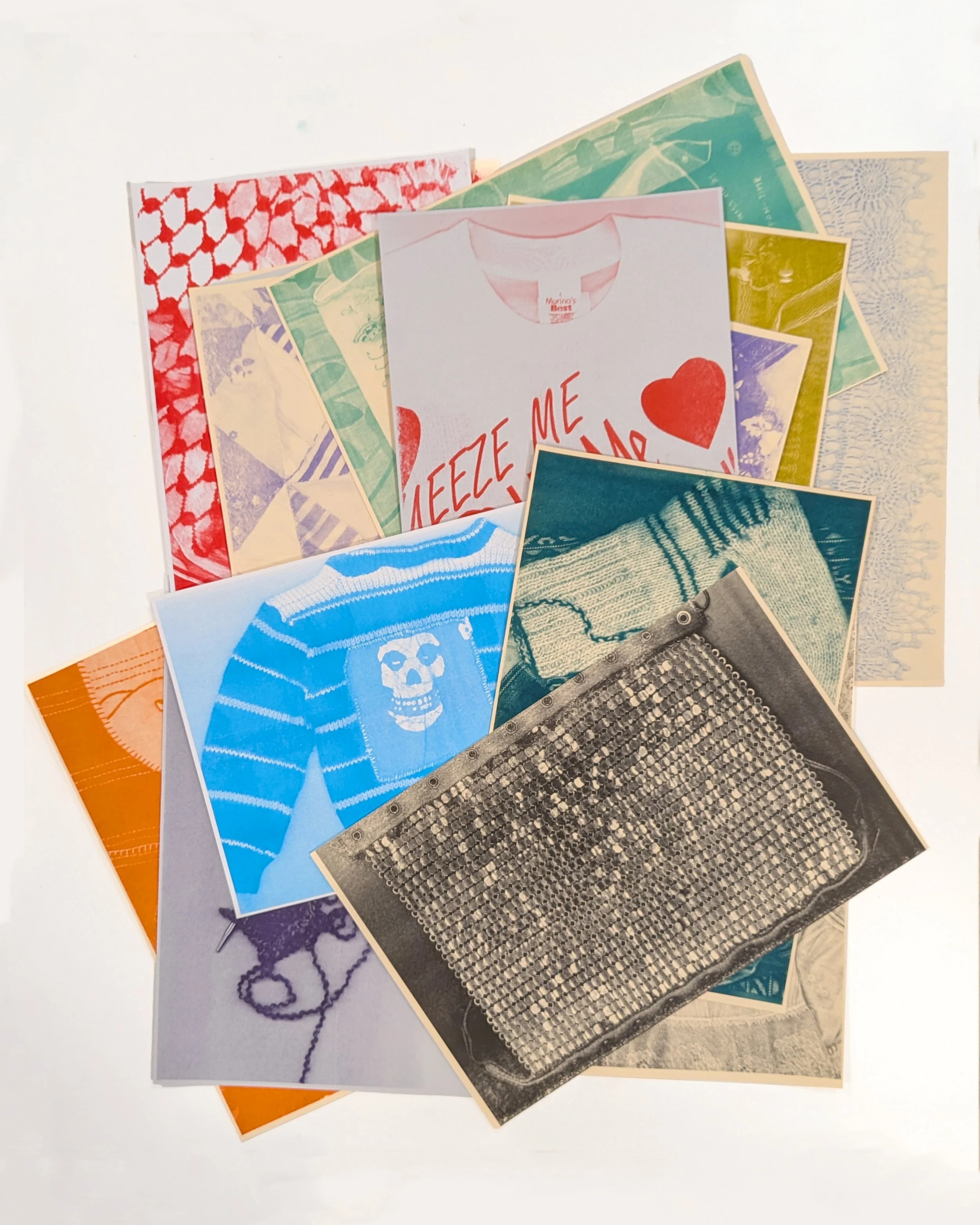
On several dedicated open studio days, folks are invited to bring in a beloved textile, mass produced or made by hand, that holds a special memory. Each person will choose a color and create a single color print. Everyone will be able to take home posters of their textile. Folks will be invited to speak to their own experiences with labor, organizing, and work.
In addition to creating risographs, a small table top loom will be available during open studio sessions, demonstrating simple patterns and allowing folks to try it themselves. A small collection of zines and publications that highlight union and community organizing will also be available to browse through.
A final open studio session will allow folks to pick up copies of the publication and experience the physical archive of submissions.
Saturday, February 28
12 - 5 pm
Textile Printing
Please bring your textile. All additional materials are provided.
Sunday, March 22
12 - 1 pm
Oracular Ekphrasis, a writing ceremony facilitated by Danielle Vogel
Please plan to arrive by 11:45 am with your textile, something to write on, and something to write with. Limited seating is available. If you have ability to sit on the floor, please bring a pillow or blanket to fold underneath you for comfort.
Danielle Vogel is a poet and interdisciplinary artist working at the intersections of queer and feminist ecologies, somatics, and ceremony.
12 - 5 pm
Textile Printing
Please bring your textile. All additional materials are provided.
Saturday, April 18
12 - 5 pm
Textile Printing
Please bring your textile. All additional materials are provided.
TBD
Weaving workshop of risograph printed contemporary and historic textiles
Publication release and gathering
Those unable to attend the open studio sessions in person are invited to submit photographs and descriptions of their textiles here.
PUBLICATION:
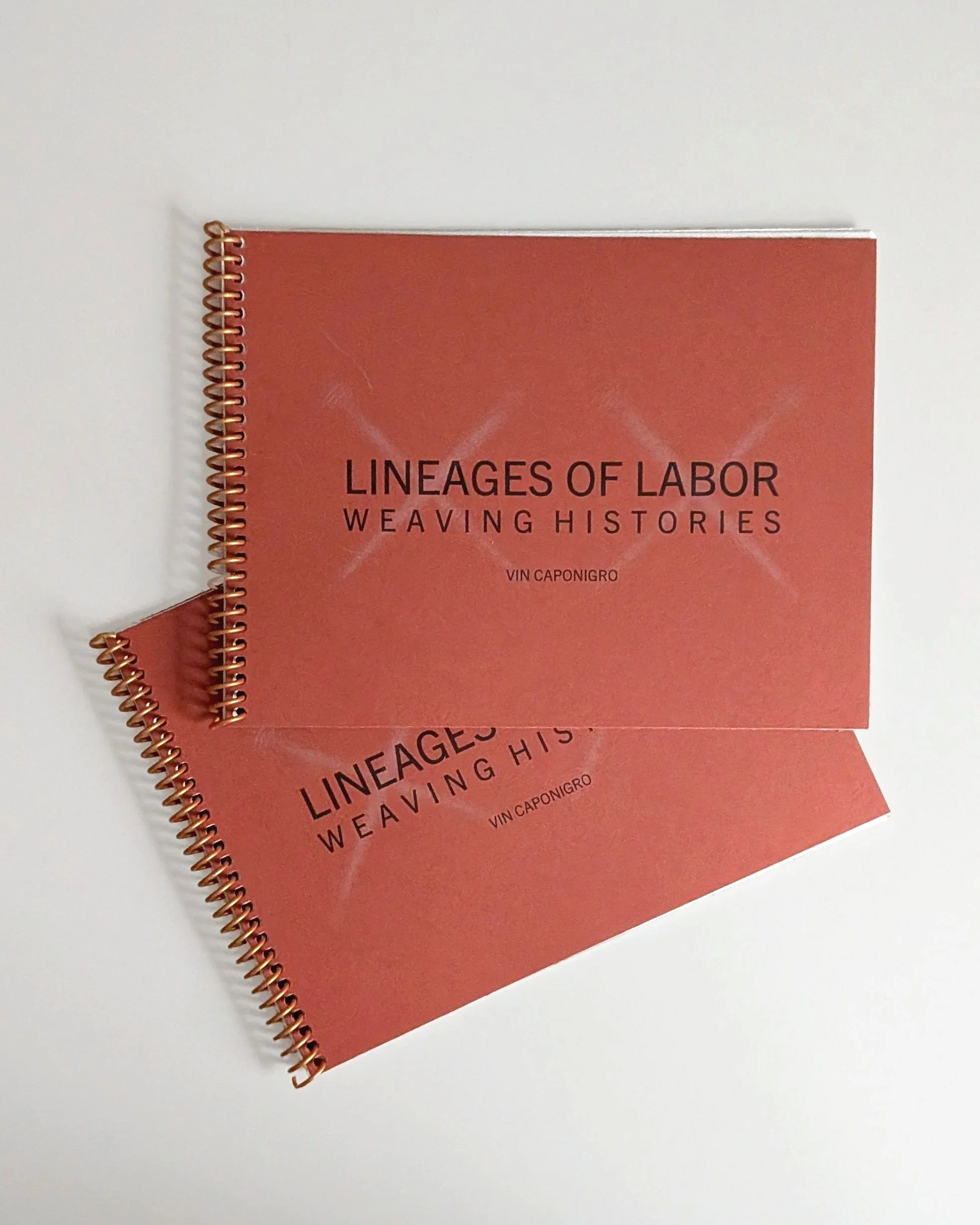
The project will culminate in a risograph printed publication that addresses the history of labor and organizing through archival texts, photographs, and contemporary narratives. Though it will be impossible for all of the submissions to be printed in the publication, everything will be documented, archived, and made available online.
Though historically considered women’s work, where men like my bisnonno occupied only supervisory roles in the factories, the publication will challenge the gendered ideologies of textile production, dismantling the binaries of art / craft and masculine / feminine, and considering the relationship between queerness, textiles, and community. Containing photographs of the textiles and their stories, alongside the history and labor of creations, the resulting spiral bound publication will emphasize the power of collective action.
This project is made possible in part by a grant from the Rhode Island State Council on the Arts, through an appropriation by the Rhode Island General Assembly and a grant from the National Endowment for the Arts.